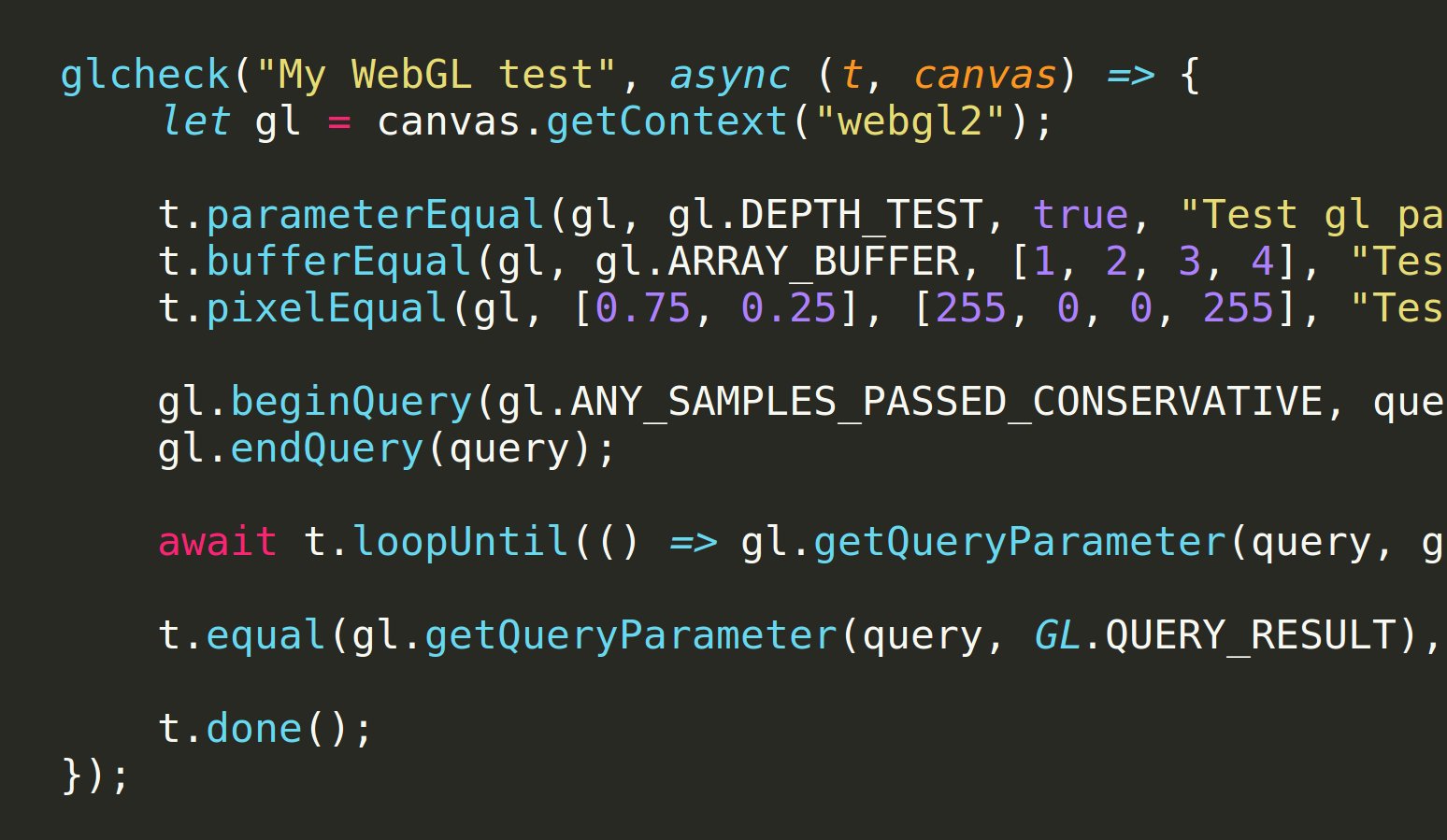
mermaid – Generation of diagram and flowchart from text in a similar manner as markdown

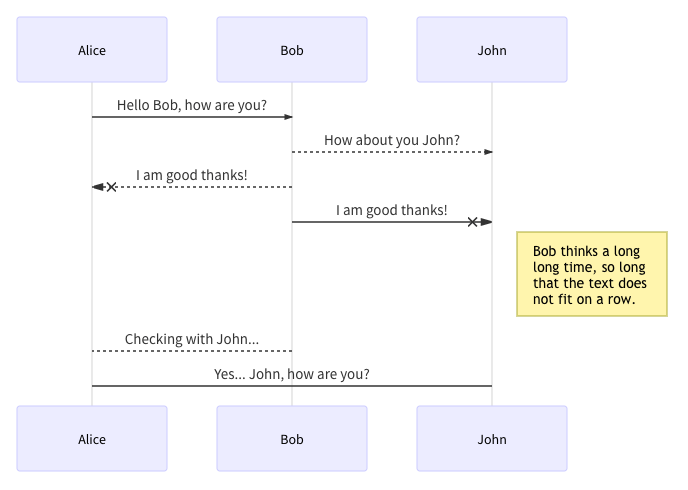
Markdownish syntax for generating flowcharts, sequence diagrams, class diagrams, gantt charts and git graphs. The code for the sequence diagram at the top is this: sequenceDiagram Alice ->> Bob: Hello Bob, how are you? Bob–>>John: How about you John? Bob–x Alice: I am good thanks! Bob-x John: I am good thanks! Note right of John: …
Use a Github repository branch or commit as a dependency in package.json

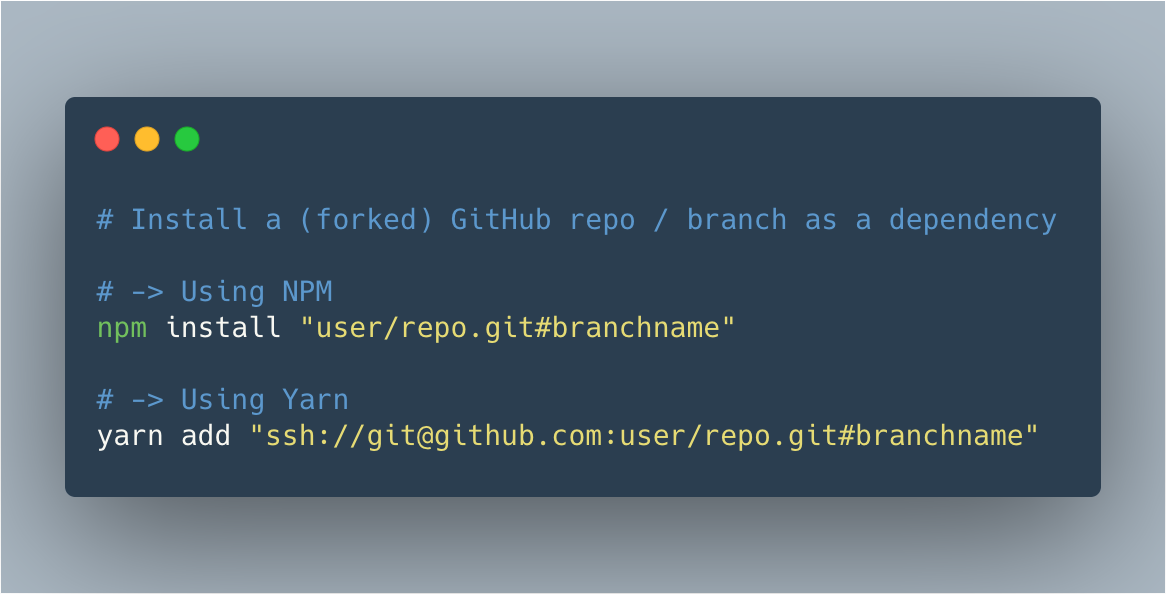
Recently I needed to test a branch of a forked GitHub repository inside a project. Instead of cloning the fork and symlinking the package locally, I installed the remote dependency directly into the project. To achieve I used the following command: Using NPM: npm install [email protected]:user/repo.git#branchname or npm install git+ssh://[email protected]:user/repo.git#branchname Using Yarn: yarn add ssh://[email protected]:user/repo.git#branchname …

react-native-v8 – Opt-in V8 runtime for React Native Android

The aim of this project is to support V8 runtime for React Native. Designed as opt-in package, it should easy to integrate with existing React Native projects. After installing it, you’ll need to adjust your build.gradle files so that it includes the new runtime — a/android/app/build.gradle +++ b/android/app/build.gradle @@ -161,11 +161,18 @@ android { } …

How to Implement Redux in 24 Lines of JavaScript

90% convention, 10% library In this post Yazeed Bzadough walks you through creating your own Redux implementation. // simplified createStore function const createStore = (yourReducer) => { let listeners = []; let currentState = yourReducer(undefined, {}); return { getState: () => currentState, dispatch: (action) => { currentState = yourReducer(currentState, action); listeners.forEach((listener) => { listener(); }); …

Passing Elements as Props in React

I like this nuanced post by David Barral in which he goes over all the options on how to configure a Confirm component: what exactly do you pass in as props. In this story we are going to see a simple technique that allows you to write friendly customizable components with simple APIs, just by …

The Power of the JSON.stringify() replacer parameter

As previously detailed (2013 😱), you can use JSON.stringify()‘s second replacer parameter to pluck specific fields from it, by passing in an array: var person = {"name":"Jim Cowart","location":{"city":{"name":"Chattanooga","population":167674},"state":{"name":"Tennessee","abbreviation":"TN","population":6403000}},"company":"appendTo"}; JSON.stringify(person, ["name", "company"], 4); // ~> "{ // "name": "Jim Cowart", // "company": "appendTo" // }" As Pawel explains the parameter can also be a function, to …

Manage React State with zustand

Small, fast and scaleable bearbones state-management solution. Has a comfy api based on hooks, that isn’t boilerplatey or opinionated, but still just enough to be explicit and flux-like. import create from 'zustand' const [useStore] = create(set => ({ count: 1, inc: () => set(state => ({ count: state.count + 1 })), dec: () => set(state …