
JavaScript File Format Differences: The difference between Generic JavaScript, JavaScript Modules, and CommonJS Modules

There’s the pervarsive notion that all JS is created equal and that there’s only minor and easily detectable differences between the various file formats used to author JavaScript. This is correct, from a certain point of view. Very resourceful Gist which highlights the key differences between Generic JavaScript, JavaScript Modules, and CommonJS Modules! Take the …

Have a web page prevent your screen/computer from dimming/sleeping with the Wake Lock API

On some sites you don’t want the screen to dim (and eventually turn off) when left idle. Think of a run-tracking app, a puzzle game that takes device motion input, a recipe site for example: you’d want to keep the screen awake even if there is no touch input. This is where the Wake Lock …

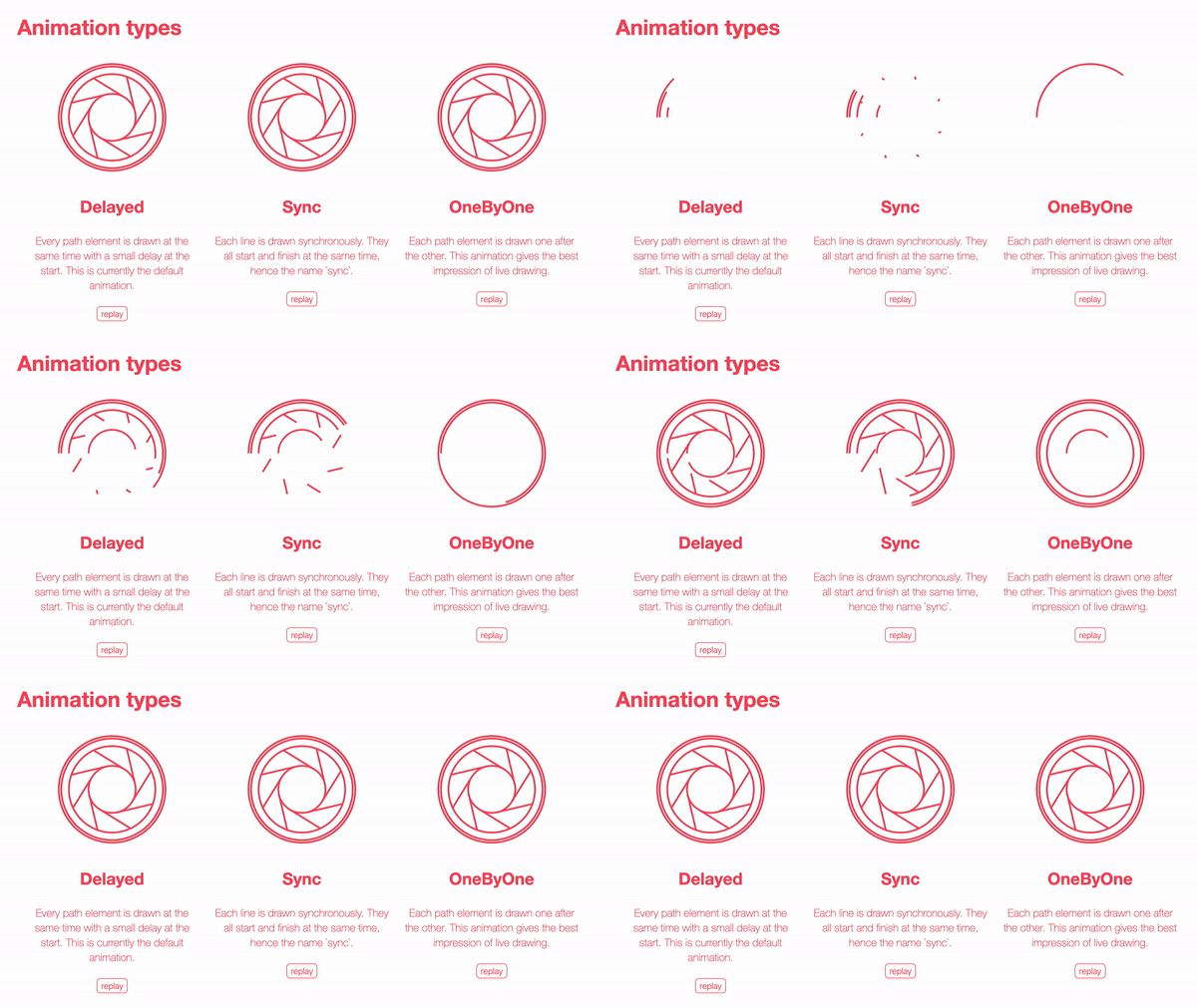
SVG Line Animation with Vivus.js

Vivus is a lightweight JavaScript class (with no dependencies) that allows you to animate SVGs, giving them the appearence of being drawn. There are a variety of different animations available, as well as the option to create a custom script to draw your SVG in whatever way you like. Think SVG line animations, but then …

When in doubt, trust the browser

Presentation by Pieter Beulque, as given at the most recent FronteersBE meetup, in which he builds a Tweet Embed using Web Components’ Custom Elements. As a front-end developer, you’re always confronted with making choices. In this talk I cover the benefits you get for free when considering W3C standards or standard browser API’s instead of …

The unseen performance costs of modern CSS-in-JS libraries in React apps

Aggelos Arvanitakis, writing for the Web Performance Calendar 2019 edition: Besides some of the great advantages CSS-in-JS boasts over traditional CSS, it may still create performance issues in certain apps. In this article, I will attempt to demystify the high-level strategies of the most popular CSS-in-JS libraries, discuss the performance issues they may introduce on …

The State of JavaScript 2019

Last week the State of JavaScript 2019 got released, showing the results of a survey taken amongst some 20K JavaScript Devevelopers, asking them about their favorite JavaScript features, front-end frameworks and back-end frameworks. Although the group of participants is quite limited (both in numbers and locations), they’re all fond of React and Vue, TypeScript, Arrow …

Handling JavaScript events with Web Workers

Alex MacArthur: The advantages of Web Workers are many, but things really clicked for me when it came to the several DOM event listeners in any given application. These all necessarily live on the browser’s main thread, and if that thread is congested by a long-running process, the responsiveness of those listeners begins to suffer, …

ESNext: Relatively format time with Intl.RelativeTimeFormat

A proposal to the ECMAScript Internationalization API Specification (ECMA-402) that just moved to Stage-4, is Intl.RelativeTimeFormat. It’s a way to format time in a relative manner – e.g. “10 minutes ago” or “in 3 quarters” – while also taking a language into account. const rtf_en = new Intl.RelativeTimeFormat('en'); console.log(rtf_en.format(-1, 'day')); // ~> 1 day ago …