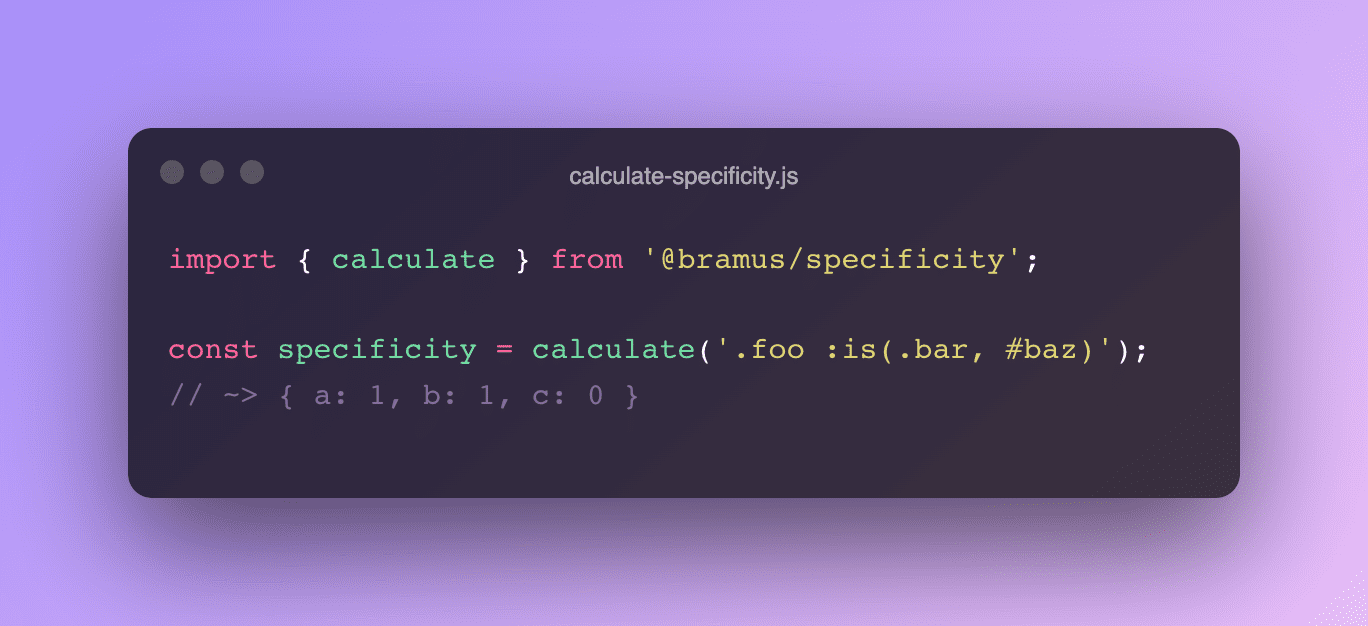
Introducing `@bramus/specificity`, a JavaScript package to calculate the specificity of a given CSS Selector
A rather geeky/technical weblog, est. 2001, by Bramus
@bramus/specificity Introducing `@bramus/specificity`, a JavaScript package to calculate the specificity of a given CSS Selector

Interop 2022 is the successor to Compat 2021, an joint effort by browser vendors to work on browser compatibility. Interop 2022 is a public effort and benchmark around which browser vendors can collaborate to improve interoperability in areas believed to be important to web developers. It is composed of two parts: 15 focus areas on …
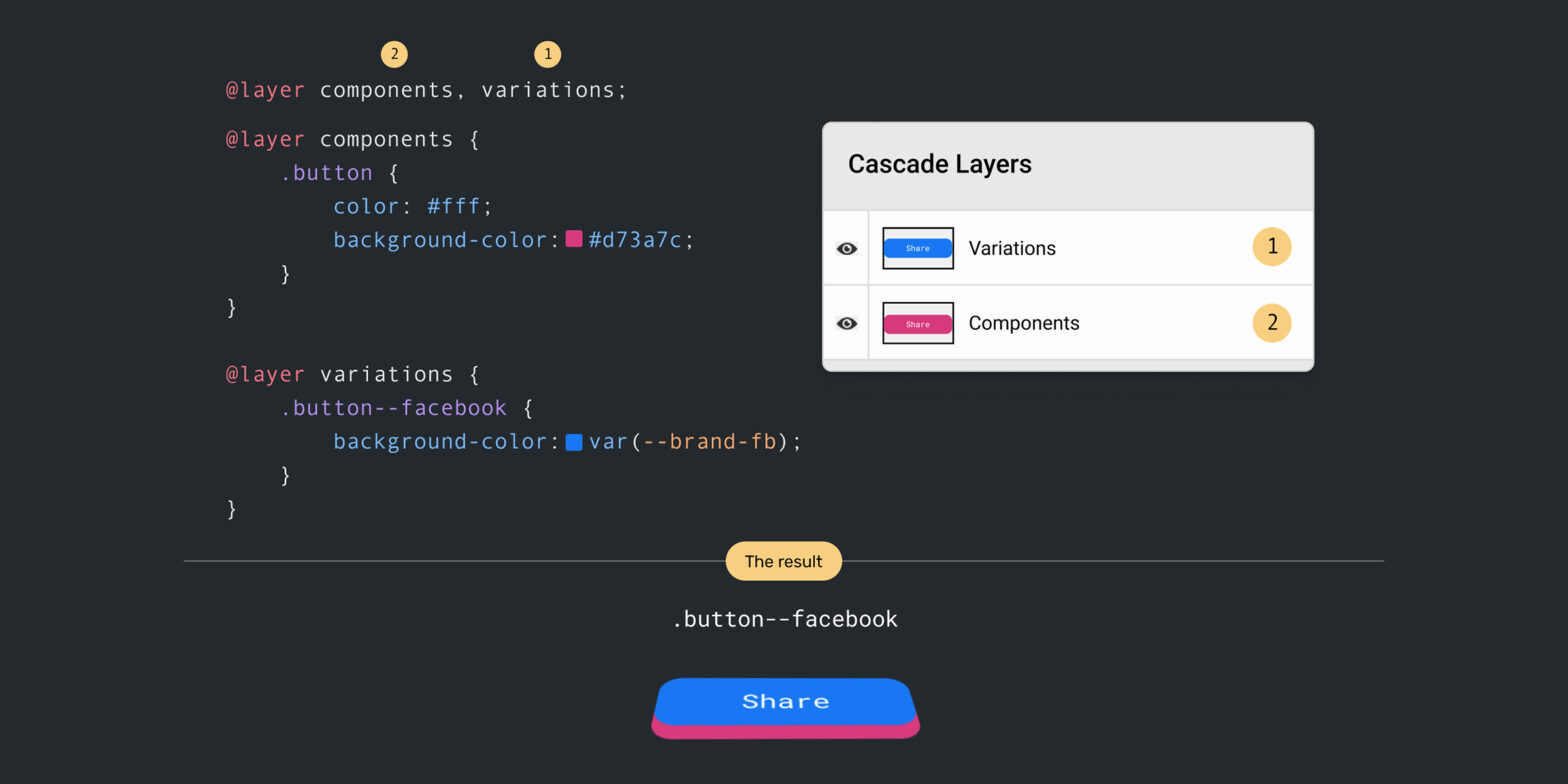
Here’s Ahmad Shadeed‘s post on Cascade Layers In this article, we’ll explore how cascade layers work, and how they will help us write CSS with more confidence, along with use-cases and examples. Hello, CSS Cascade Layers →
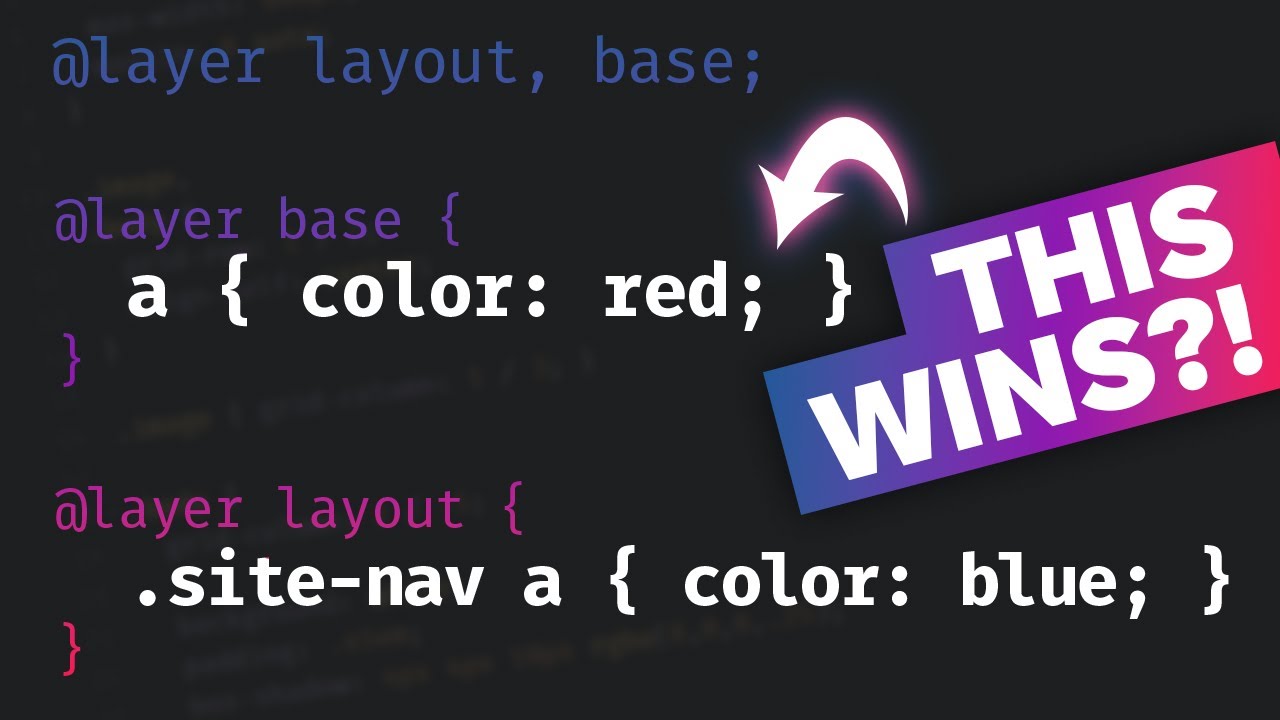
Kevin Powell takes a look at Cascade Layers: If you’re new to Cascade Layers and are looking for more resources, here’s a few useful ones: The Future of CSS: Cascade Layers (CSS @layer), by yours truly Getting Started With CSS Cascade Layers, by Stephanie Eckles CSS Cascade Layers in 5 Minutes, by Una Kravets Cascade Layers: …

The past few months, I’ve seen a lot of posts on Color Spaces and Colors in CSS float by. Here’s a small roundup.

You can’t connect to a database from within CSS, Right? Or can you? Leveraging Houdini and SQL.js — which is SQLite compiled to JavaScript to serve as in-memory DB — you can. Using some Custom Properties, you can pass in queries to be executed. .query-display { background: paint(sql-css); } main { –sql-query: SELECT * FROM …
In this talk, we dig into how the CSS Cascade actually works. Origins, !important, Layers, Specificity, … it’s all covered.
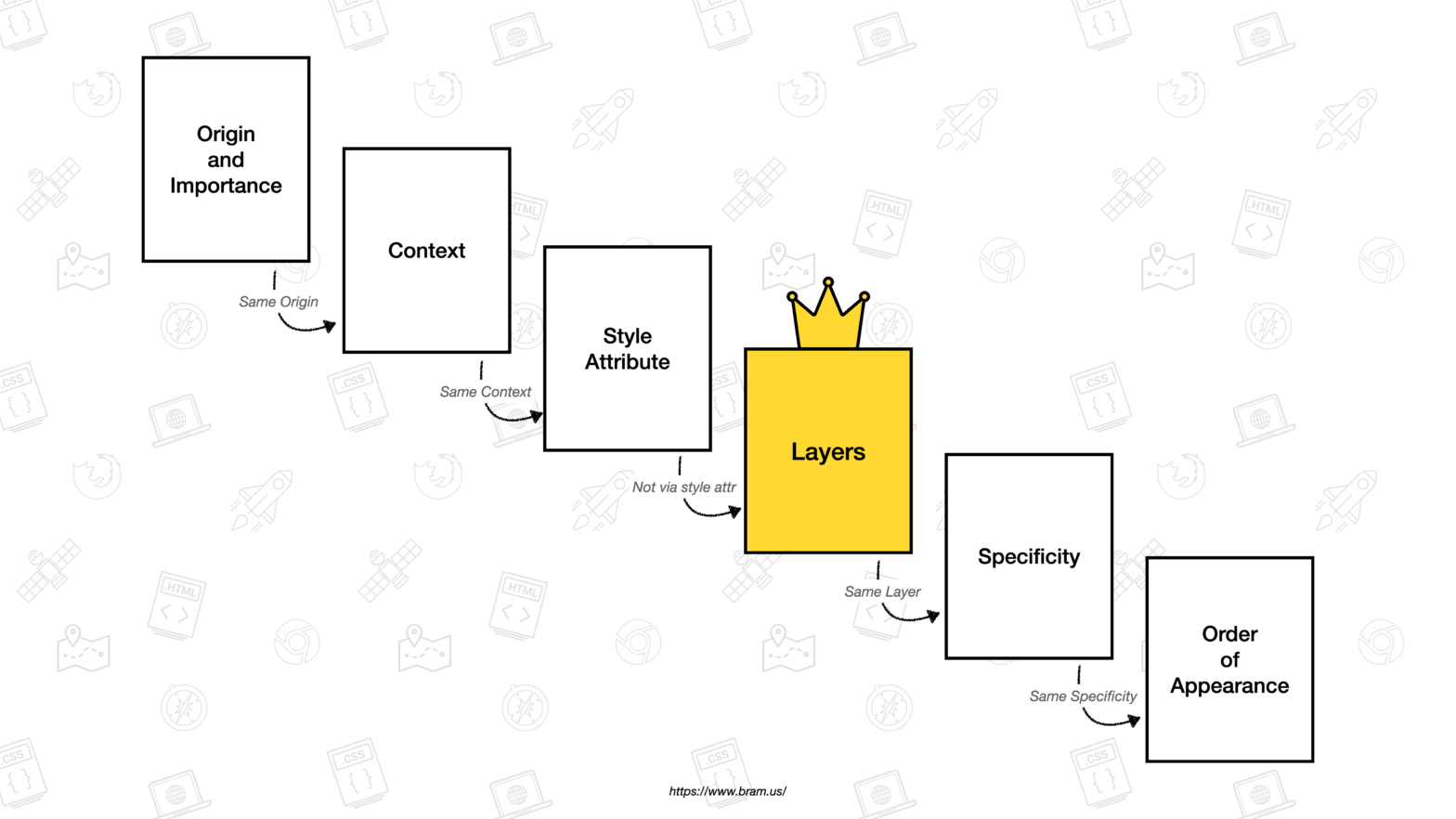
Highly interesting post by Manuel Matuzovic on Cascade Layers. Manuel skips out on the technical/theoretical details — which were already been covered by me, Stephanie, Una, … — and jumps straight into the practical side of things. While I’m writing this blog post, I’m looking at a large site I’ve been working on and I’m …
Continue reading “Cascade Layers: Practical Use-Cases / Examples”
Stephanie Eckles, writing for Smashing Magazine: Cascade layers introduce the new at-rule of @layer. The intent is to help CSS authors be more intentional about ordering the “layers” of CSS rules as a new method of cascade management. Getting Started With CSS Cascade Layers → If you’re looking for the quick version on Cascade Layers, …

In CSS, Specificity is expressed as a triad/triple (A,B,C). An example value would be (1,1,2). To compare specificity — i.e. to see which value has a higher specificity — you need to compare each component of the triple until you find a difference: function compareSpecificity(x, y) { // x and y being arrays such as …