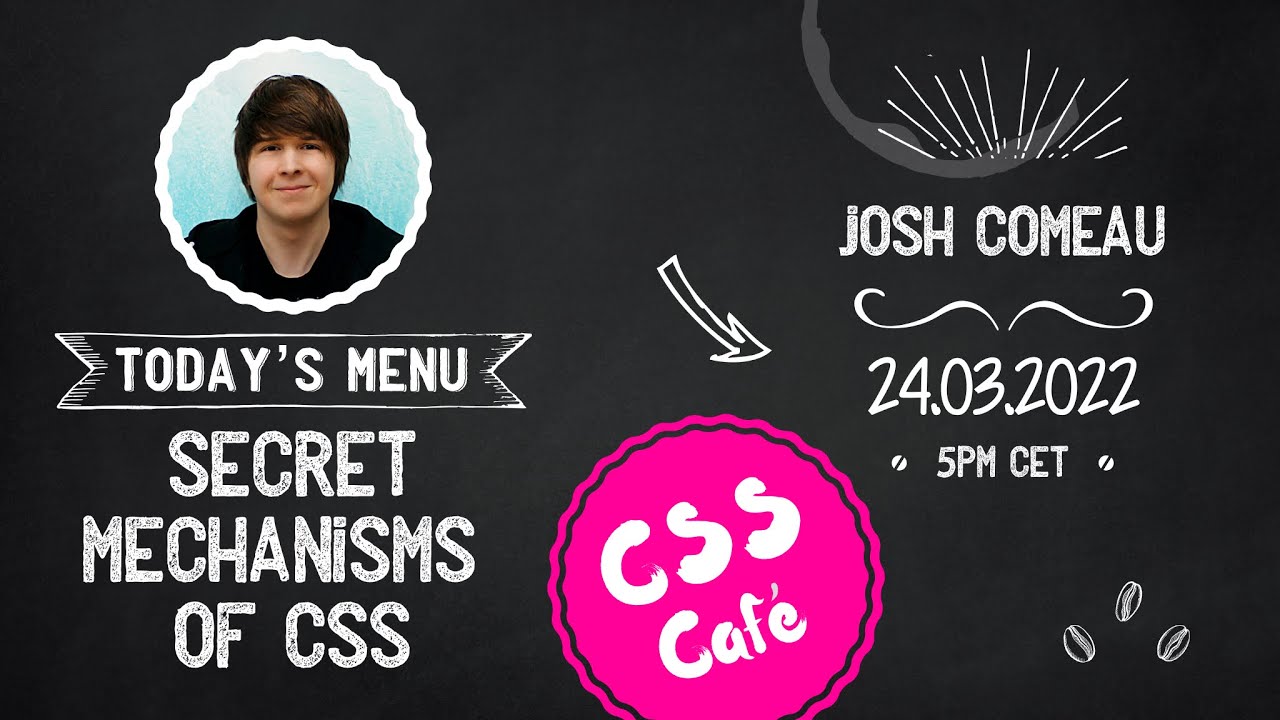
In this CSS Café talk, Josh W. Comeau digs into several Layout Modes and a few common misunderstandings about CSS (such as Stacking Contexts) Also see the Understanding Layout Algorithms post Josh recently published.
A rather geeky/technical weblog, est. 2001, by Bramus
In this CSS Café talk, Josh W. Comeau digs into several Layout Modes and a few common misunderstandings about CSS (such as Stacking Contexts) Also see the Understanding Layout Algorithms post Josh recently published.
Over at Smashing Magazine, Louis Lazaris covers a few of the lesser known HTML attributes: The enterkeyhint Attribute For Virtual Keyboards The title Attribute On Stylesheets The cite Attribute For The <blockquote> And <q> Elements Attributes For Custom Ordered Lists The download Attribute For The <a> Element The decoding Attribute For The <img> Element The …
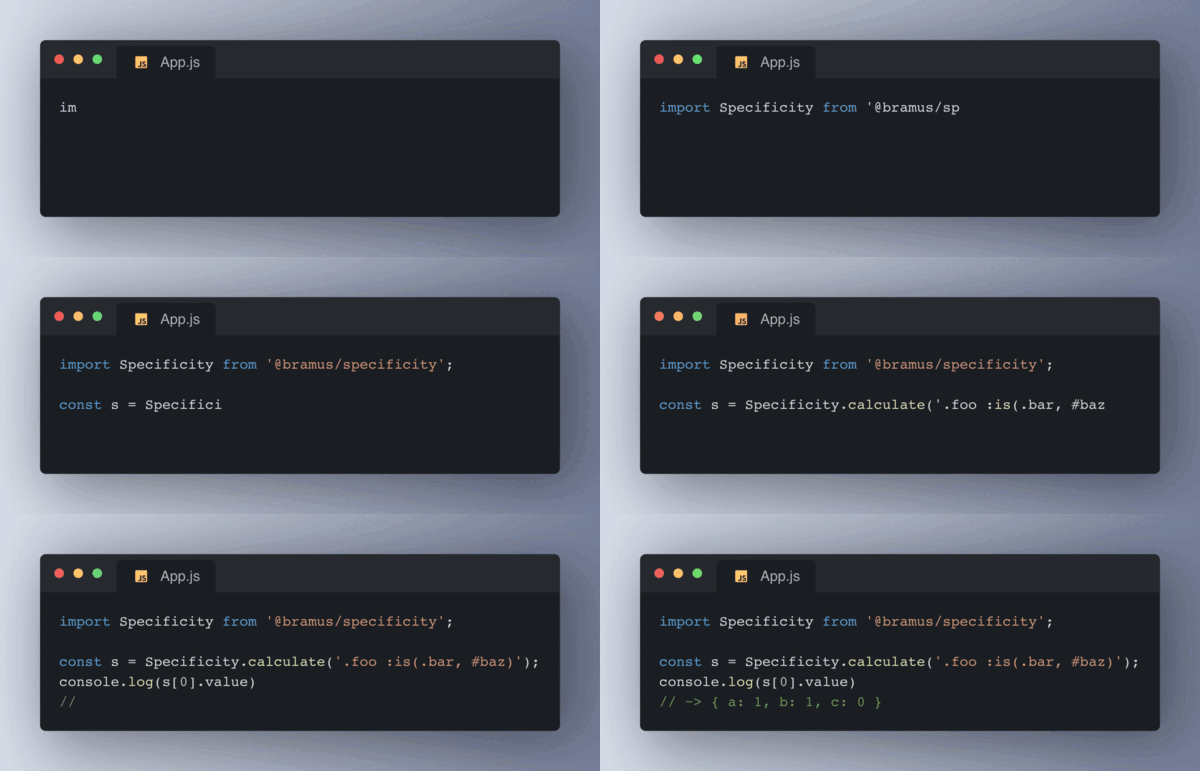
Like Carbon or Ray, but the output is an animated GIF. Beware though: the generated GIFs are HUUUUUGE. The embedded animation above originally was a 14MB GIF. Converted to an MP4, it’s only 163kB. Recoded →Recoded Source (GitHub) → Via Joan Léon

The Web is an enormous asset and Mozilla is committed to protecting it and making it better. Powerful economic and technological forces have combined to make the Web the way it is today. Making it better won’t be easy and we can’t do it alone. Mozilla’s vision for the evolution of the Web →
color-contrast() – Target Contrast Ratio Demo
Nice demo by Daniel Yuschick, showing how color-contrast() does its thing. Using the controls you can change the target contrast using a keyword or a custom value. Good use of Custom Properties there as well! 👨🔬 To check this demo you’ll need Safari Technology Preview 122+ with the CSS color-contrast() Experimental Feature enabled.
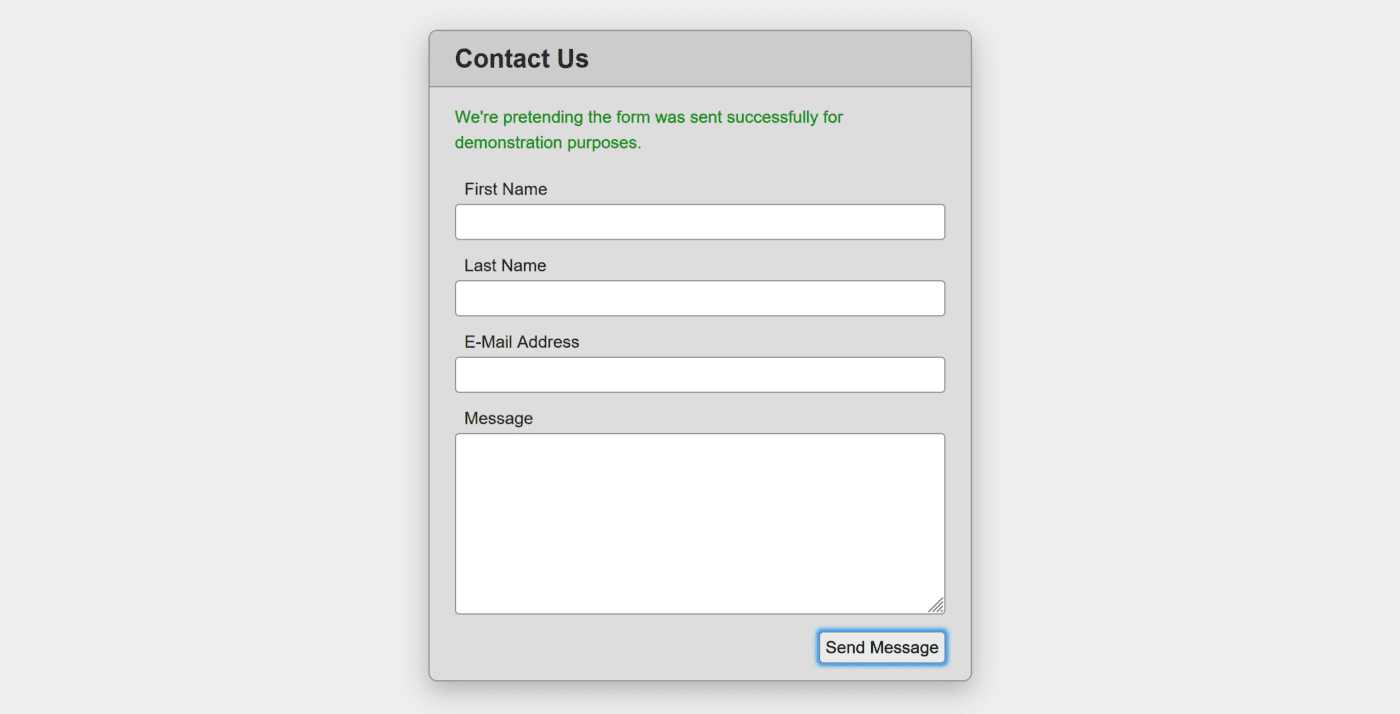
Jason Knights dissects a form that’s: not a form relies entirely on JS to handle the form submission He then takes his own approach that uses an actual <form> that can be submitted, along with some extra JS sprinkled on top to prevent a full reload. By using PROPER name=”” in the markup and a …
Continue reading “Using FormData And Enhancing Forms With JavaScript”

Olympe is a monospace font revived from an Olympia typewriter. The first weight, regular, is based on the original weights of the font that was on this machine, and the light weight, close to hairline actually, has been designed from scratch, with a heavy punctuation, because who doesn’t like a bit of contrast? When I …
jless — A command-line JSON viewer
jless is a command-line JSON viewer designed for reading, exploring, and searching through JSON data. Installation via Homebrew brew install jless jless — A command-line JSON viewer →jless Source (GitHub) → Related: jq – flexible command-line JSON processor
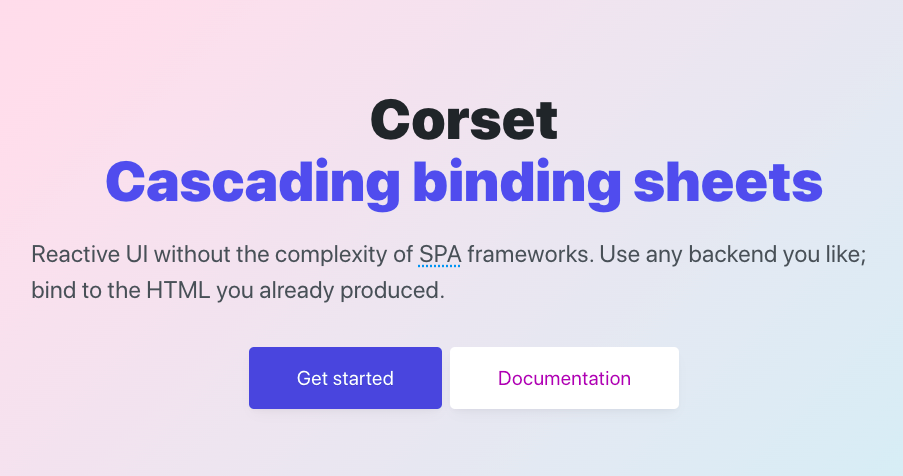
Matthew Philips made something odd-looking: a JavaScript framework that lets you add DOM bindings using a CSS-like syntax. Say your framework of choice generates this markup: <div class="counter"> <button type="button" class="increment">Increment</button> <button type="button" class="decrement" disabled>Decrement</button> <div class="result"> Count: <strong class="count">0</strong> </div> </div> Using Corset, you can then add behavior as follows: import sheet, { mount …